Non-Human Identity Lifecycle Management for AI Agents
Organizations need identity controls designed for agents that appear instantly and act autonomously.
Non-human identity lifecycle management for AI agents takes more than adding machine accounts to an employee directory. It requires controls built around how agents are created, authorized, observed, and retired. A system triggered by hiring and departures cannot govern autonomous software that appears in an afternoon, chooses its own actions, and leaves usable credentials behind when its work ends.
Why the identity model built for employees cannot govern AI agents
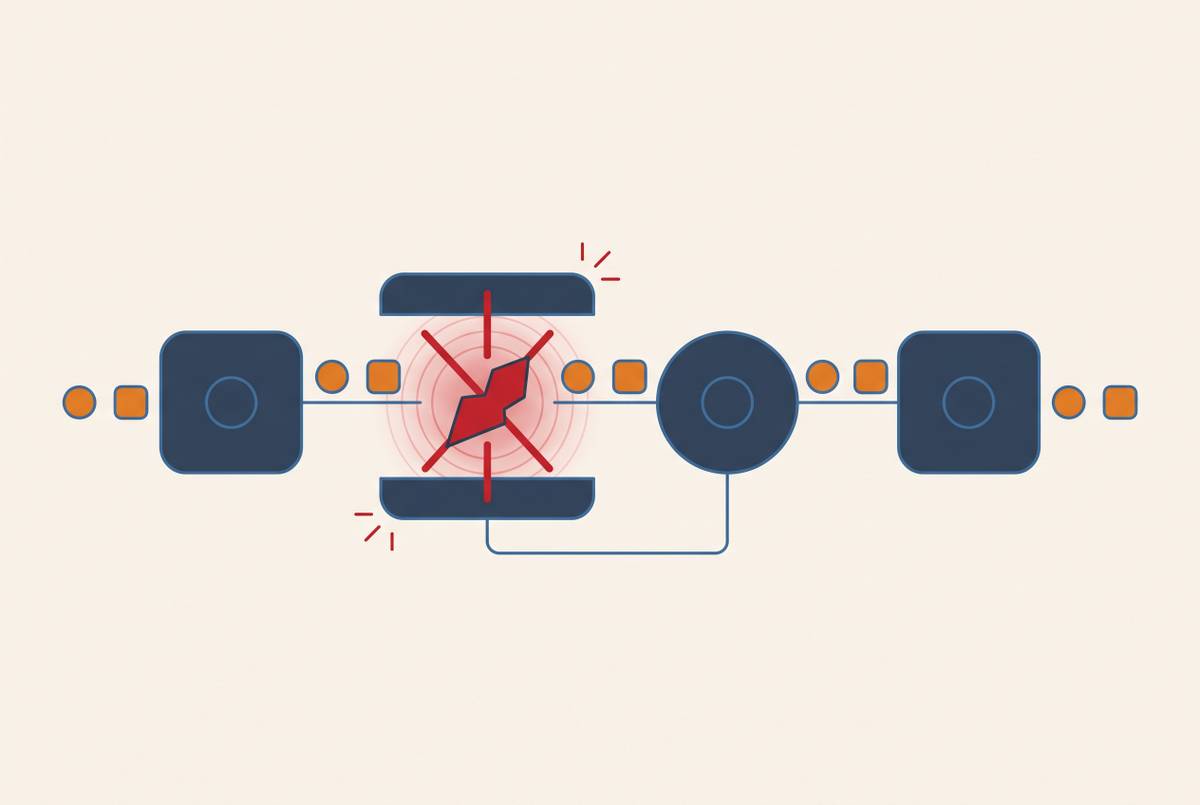
A developer spins up a customer-service agent in an afternoon, and the identity and access management system never receives a provisioning event. That is a design failure. The agent was created outside the process the system watches. Employee identity infrastructure expects a person to join, change roles, and leave, with HR events triggering the corresponding changes in access.
Agents have no obligation to follow that itinerary. Developers and platform teams can create them without passing through an identity provider, then abandon them when a project ends. Portnox's 2026 framework identifies the resulting mismatch in speed, non-deterministic behavior, and delegated authority. Static roles cannot predict what an agent will do, while delegation complicates attribution. More fundamentally, agents lack the bodily and biometric anchors of human identity, may have no persistent memory, are ephemeral by design, and have no legal standing. Treating them as unusually productive employees is a category error.
What the agent identity lifecycle actually looks like, stage by stage
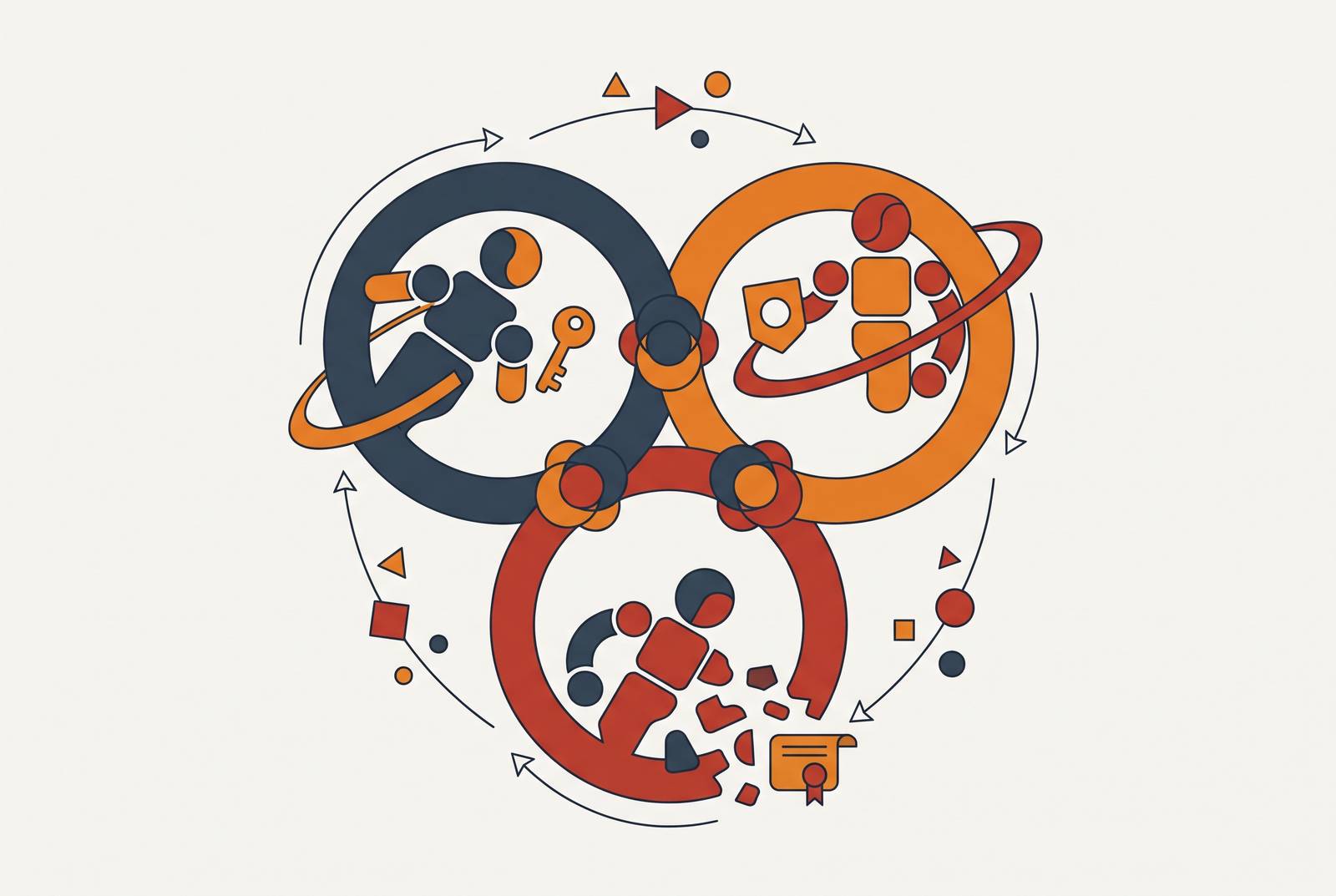
A purpose-built lifecycle has five stages, beginning with continuous discovery and inventory. Discovery locates agents across SaaS platforms, CI/CD pipelines, and cloud workloads. Contextual ownership and attribution then connect each agent to a named human accountable for its behavior, continued use, and decommissioning. That person is the lifecycle's accountability anchor.
Least-privilege scope right-sizing compares what an agent uses with its granted permissions, including broad access given at the start to make things easier. Runtime credential management governs short-lived token issuance, rotation schedules, and drift detection through automated policy. The final stage is offboarding with automated deprovisioning, which revokes associated identities when a workflow or tool is retired. Inventory records what exists, ownership establishes responsibility, scoping and credentialing govern access, and retirement ends it. Runtime observation supplies evidence about behavior while an agent is active.
Why agents are never discovered before they act
Traditional IAM discovery often begins by synchronizing records from an identity provider such as Okta or Microsoft Entra ID. An agent spawned directly inside a SaaS platform or cloud service may never enter that directory. There is no record to synchronize. Waiting for a provisioning event therefore cannot uncover an identity that was created without one.
When a user connects an AI productivity tool through OAuth, the tool may request permission to integrate downstream services. Third-party agents can then inherit human-granted scopes without anyone continuing to verify them or keep them in an inventory. Active and dormant OAuth grants, API keys, personal access tokens, and autonomous agent tokens end up spread across environments, with no single authoritative directory that holds them all.
The failure is not simply insufficient instrumentation. The creation path bypasses the assumed registration point, so discovery must be continuous. An agent outside the inventory cannot reliably be assigned an owner, scoped, or monitored.
How credential practices built for stable service accounts fail agents that spin up and down in hours
Traditional credential practice assumes that a service account will persist long enough for a predictable rotation schedule to make sense. An agent may disappear within hours, but its stored API key or static OAuth token can still work. The secret outlives the job it served. Service migrations and discontinued workflows can consequently leave abandoned credentials with read/write access.
The recommended alternative begins with a question. Does this workload need a stored secret at all? Cloud managed identities, workload identity federation using OIDC, and SPIFFE/SPIRE for workloads across clusters and clouds replace stored credentials with runtime-issued access. For agents, credentials should be short-lived, task-scoped, and issued from a vault or workload identity system. Secrets should be kept out of prompts, context windows, logs, and agent memory.
That transition has a real operational cost. Ephemeral credentials can complicate legacy integrations, and replacing established practices is not free. However, remediation cost grows with the time standing credentials remain ungoverned, independently of how aggressively they are rotated. Preserving a convenient secret also preserves its exposure.
Why least privilege breaks when agents decide their own action sequences at runtime
Traditional authorization checks whether an identity is allowed to call an API. Agentic authorization must also ask whether an emerging sequence of calls fits the purpose that was approved. Individually permitted actions can combine into an unintended outcome.
Portnox illustrates this with a customer-service agent given access to an order management system. An order lookup may lead the agent to decide that a cancellation or refund is the appropriate next step. A code review bot has a similar problem when it has both repository read access and write access to an external code-quality service. Each capability may be legitimate on its own, but together they can allow intellectual property to leave the repository.
Least privilege therefore cannot remain a one-time provisioning decision. Scope right-sizing must compare usage with granted permissions and flag unused or excessive access. Periodic attestation and certification campaigns must include non-human identities so that someone is accountable for reviewing their grants. Even then, scoping cannot contain every unintended action sequence an agent can construct. Runtime observation is not optional.
Why monitoring that sees an action but not the reasoning behind it is insufficient for agent governance
An API log leaves the reasoning behind a recorded action unexplained. If an agent deletes a production table because it misunderstood a prompt, an identity system may see an authorized identity performing an authorized action.
The Discord identity-spoofing case shows this distinction plainly. A researcher changed a display name to match an agent's owner and opened a channel where the agent had no prior history. The agent accepted the name as identity evidence, then deleted memory files, changed its own name, and reassigned administrative access. A conversation led to actions that looked authorized, without an exploit.
The OWASP Top 10 for Agentic Applications 2026 identifies this attack surface in ASI03, Identity & Privilege Abuse, which covers manipulation of delegation, role inheritance, control flows, and cached credentials or conversation history. Access governance determines what an agent may reach, while runtime security assesses its behavior as actions unfold. For controls to work, they need privileged-action logs that record the actor type, target resource, and policy decision, and they must block denied requests before they run. Login visibility alone stops too early.
How multi-agent delegation chains break attribution and create compounding risk
When agents act for other agents, attribution becomes a chain. Human-granted scopes can pass through several intermediaries without renewed verification at each hop. Monitoring one agent cannot show the whole line of authority. Tracing that line of authority becomes harder when it crosses organizational or cloud boundaries.
OAuth cannot serve as the sole identity layer for these chains. Each trust domain needs its own authorization server, but there is no way to verify tokens across trust domains. Token exchange can record prior actors in nested “act” claims, but that history is informational, while only the current actor is enforceable for access-control decisions. OAuth also provides no holder-side scope attenuation.
OIDC-A proposes agent identity, attestation, delegation representation, and attribute-based authorization compatible with existing OAuth 2.0 and OpenID Connect infrastructure. The OpenID Foundation's AuthZEN Working Group has also approved the AuthZEN Access Request and Approval Profile and the AuthZEN Profile for Model Context Protocol Tool Authorization as official Working Group Drafts. These are steps toward explicit delegation. A mature, interoperable identity primitive for multi-hop chains across trust boundaries does not yet exist.
What the emerging standards say every lifecycle stage now requires
The emerging baseline calls for identities issued just in time rather than stored as secrets, with an owner, purpose, and end date for every identity. Least privilege should follow observed usage, and policy should be checked at the moment of action without standing access. The direction is clearer than the implementation. Standards convergence remains unfinished.
NIST entered this work formally in February 2026. The NCCoE Concept Paper “Accelerating the Adoption of Software and AI Agent Identity and Authorization” proposes a demonstration project examining MCP, Next Generation Access Control, SP 800-207 Zero Trust, and federated identity frameworks. NIST's AI Agent Standards Initiative covers standards led by industry, work led by the community to develop open source protocols, and research into agent security and identity.
The OpenID Foundation frames creation around a declared purpose and owner, runtime around proof of identity and permission, and delegation around cryptographically verifiable on-behalf-of relationships. The Linux Foundation's Agentic AI Infrastructure Foundation treats the infrastructure gaps as a shared problem. Meanwhile, the Machine Identity Governance Taxonomy adds jurisdictional variation across enterprise and geopolitical boundaries.
Why offboarding is the lifecycle stage most likely to be skipped, and what that costs
Employee departures supply a recognizable trigger for deprovisioning. Agent retirement usually arrives as a workflow ending, a project closing, or a team replacing a tool. Any of these can happen without telling the identity system to revoke access. The work can stop while its authority remains.
Service tokens, personal access tokens, and webhooks have no natural expiration unless one is enforced. After a migration, abandoned credentials can retain read/write access even as the systems they served recede from active monitoring. Automated deprovisioning must therefore respond to workflow lifecycle events.
Ownership also needs to survive staff changes. When the employee who created an agent leaves, automated reassignment prevents its credentials from becoming orphaned with the departing account. This is where the owner named at creation becomes operationally consequential. Retirement failures accumulate, with each unretired identity adding to the existing attack surface. That growing stock of access supplies the conditions behind predictions of a public agentic breach.
What a governance failure at agent scale looks like in practice, and why it is predicted to materialize publicly
Forrester's 2026 cybersecurity and risk predictions forecast an agentic AI public breach in 2026 that leads to employee dismissals. The report attributes the expected incident to a cascade of governance failures rather than sophisticated external attackers, identifying missing access controls and multi-agent chains as enabling conditions.
The Discord case shows why technical exploitation need not be the starting point. In that new channel, the agent lacked prior interaction history, cryptographic proof of its owner's identity, and a behavioral baseline against which to judge the request. At organizational scale, governance must also establish who approved an agent, what it may do, and when its access was last reviewed, as compliance expectations increasingly call for auditable AI-driven decisions and demonstrably least-privileged access.
Forrester senior analyst Paddy Harrington gives the systemic consequence plainly. “When you tie multiple agents together and you allow them to take action based on each other, at some point, one fault somewhere is going to cascade and expose systems”.
What a lifecycle-complete agent identity program requires that most current IAM stacks do not provide
A lifecycle-complete program needs continuous cross-environment discovery. It also needs human-anchored ownership with automated reassignment, usage-based entitlement analytics, just-in-time credential issuance with vault-integrated rotation, and automated deprovisioning tied to workflow events. No current IAM platform has all five mechanisms. Runtime governance also lets the program watch sequences of actions and detect and block policy violations before the actions run.
The practical requirement is to pair access governance with runtime security rather than expect either to substitute for the other. Established identity governance and administration programs already have practices such as attestation, certification campaigns, and ownership workflows. The new work is applying them to identities created faster, behaving less predictably, and operating outside HR processes.
The audit log must link privileged actions to the actor, target resource, and policy decision, while ownership records must show which human is accountable. Together, those records must support the question boards and regulators will ask about what the AI is doing in the environment and who is accountable for it.