AI Risk Committee Structures in Regulated Industries
Continuous oversight needs committees that can halt AI deployments.
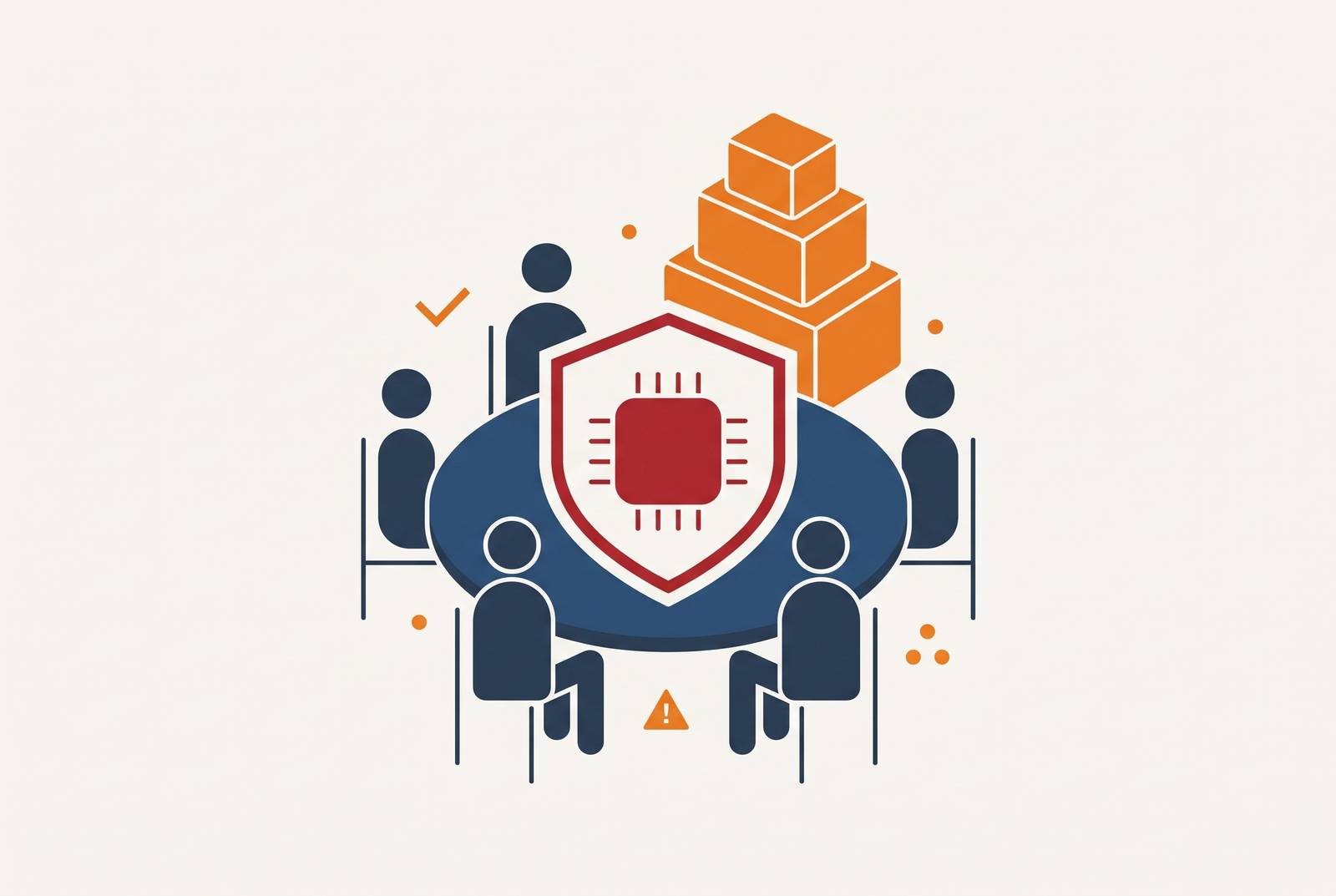
AI risk committees in regulated industries need to become continuous oversight structures. Generative and agentic AI can change behavior, act autonomously, and escape static inventories between meetings. A defensible committee therefore needs more than a charter and a calendar. It needs independent authority to stop deployments and operational controls that make that authority effective while the committee is not in the room.
Why traditional AI governance models break down with agentic and generative AI
Traditional governance assumes that a system can be identified, assessed, approved, and then expected to remain reasonably stable until its next review. Agentic and generative AI strain each part of that sequence. A system’s behavior can change materially without a formal redevelopment event, while agents can be created, modified, and retired faster than an inventory cycle captures them. The object under review will not necessarily sit still. This breaks the connection between what a committee approved and what the institution is actually running.
SR 11-7, in force from 2011 until April 17, 2026, provided the model risk framework against which much of this governance developed. Its tools included conceptual soundness assessments, outcomes analysis, and benchmarking. Those tools remain useful, but their effectiveness depends partly on stability between reviews. When a system changes between reviews, a successful assessment shows how it behaved before and cannot, on its own, assure the committee of how it behaves now.
Even the debate over whether advanced AI belongs in a software inventory or a model inventory exposes this mismatch. Classification cannot solve the underlying control problem. Either label still leaves an institution needing to know what is operating, what it can do, and who can intervene. Treating the issue as a taxonomy dispute risks producing a well-filed system that nobody can govern at the speed it operates.
What SR 26-2 changed in April 2026 and what it deliberately left out
The Federal Reserve, OCC, and FDIC jointly issued SR 26-2 on April 17, 2026, replacing more than a decade of model risk guidance. The revision narrowed the definition of a model, leaving some tools that previously fell under formal validation outside that category. Expectations scale with institutional size and complexity, with larger banking organizations most directly in view and smaller institutions with unusual model complexity still relevant. Examiners will not read a narrower definition as permission to leave consequential systems uncontrolled.
The sharper gap concerns generative and agentic AI. SR 26-2 explicitly excludes these novel, fast-moving systems from its scope and directs institutions to apply their own governance practices. That leaves institutions responsible for designing controls without the template they might otherwise have extended. The omission is consequential precisely because these systems challenge the assumptions on which the older template rested.
At the same time, SR 26-2 gives explicit standing to effective challenge, the principle that an independent function must be empowered to question a business owner and require withdrawal of a deployed system. That principle reaches directly into reporting lines and decision rights. Independence is not merely a place on an organization chart. The institution must be able to show that challenge can change an outcome, even where the guidance does not prescribe the technology-specific controls.
How regulated industries in healthcare and financial services are responding to this gap — and where current structures fall short
Banks have established ways to manage model risk, but much of their compliance work still relies on quarterly reviews and validation cycles run by committees and designed for the Basel II era. Deployment is moving on a different clock. Accenture’s Top Banking Trends for 2026 report describes banks using cloud provider platforms to build intelligent agents aligned with their brand, compliance, and service standards, with agents already improving performance in software engineering, risk management, and customer service. The supervisory concern predates the replacement guidance, as the Government Accountability Office found in May 2025 that SR 11-7 may not explicitly address AI models.
FINRA’s action in In re Brex Treasury LLC shows that the gap is not protection from enforcement. FINRA imposed a censure and a $900,000 fine after Brex took a machine-learning account-screening model used for its existing customers, venture-backed and middle-market companies, and applied it to a wider range of small businesses without reasonable policies for its design, testing, and validation. Changing the population exposed to a tool required governance of that changed use.
Healthcare faces a related gap at procurement. The FDA’s 2026 CDS guidance expands the category of AI-enabled clinical software that can reach the market without premarket review, removing a clearance signal that vendor due diligence could previously use while clinical risk remains. Oversight is also spread across institutional bodies. UnitedHealth Group’s 2026 Proxy Statement assigns financial, legal, regulatory, privacy, and security AI risks to one board committee, and clinical, coverage, and operational risks to another. Elevance Health’s quarterly-cadence model illustrates how deployment can outpace review, while the distributed model leaves unclear who can act across boundaries.
Readiness has not caught up with these demands. McKinsey’s 2026 AI Trust Maturity Survey found that only about one-third report governance maturity levels of three or higher across agentic AI controls, with technology, media, and telecommunications and financial services co-leading the field. The sectors are converging on an expectation of continuous oversight, but from different institutional foundations. Neither established validation machinery nor broad committee coverage is, by itself, evidence of operational control.
Why authority, not composition, is what determines whether an AI risk committee actually governs
An AI risk committee governs only if its decisions bind the people deploying AI. Broad membership, external advisers, a published charter, and regular meetings cannot substitute for the power to pause or block a high-risk deployment. Without that power, the committee is advisory. Its calendar may be full, but its hands are empty. A smaller body with explicit deployment authority has a stronger claim to being a governance structure.
Effective challenge makes the distinction concrete. A committee chaired by the executive responsible for shipping AI capability cannot independently challenge that delivery function. That conflict is built into how decisions are made, even before anyone disagrees. Separating the roles costs political capital because it changes who can say no. That is also why the separation has practical value, rather than being another refinement to committee procedure.
The design implication is to place the chair in risk rather than delivery, with membership drawing from risk, legal, security, data science, and a named business owner. The charter should grant authority to approve, condition, or block deployment and define the triggers for escalation to the board. Shared attendance is not shared accountability. The BIS Consultative Group on Risk Management’s 2025 report recommends adapting the three lines of defense to AI-specific threats, with business functions owning use cases, risk and compliance overseeing them, and internal audit providing independent assurance. This preserves a clear distinction between operating a system, challenging its operation, and examining whether that challenge works.
What parts of model risk management transfer to agentic AI governance and what does not
Institutions do not need to discard model risk management to govern agentic AI. Independent challenge, documentation of purpose and data inputs, intended-use boundaries, and performance thresholds all transfer. So do escalation structures, board-level accountability for material risk, and the three lines of defense. These practices establish ownership and make decisions examinable. Their value does not depend on assuming that every system behaves like a conventional model.
What does not transfer is confidence that scheduled validation and static inventories are sufficient. Point-in-time testing cannot catch every subsequent behavioral shift in a system that recalibrates autonomously on incoming data. A quarterly inventory can miss agents that are created and retired between reports. Benchmarking can also lose force when behavior changes without formal redevelopment.
The Brex action illustrates why an institution cannot contract out responsibility for how it uses a third-party tool. Committee records must show what was decided and who is accountable for it, beyond recording that a meeting took place. For healthcare, the corresponding structure is a named senior owner for each material AI deployment, an oversight body empowered to pause or modify deployments on demand, and clinical leadership with explicit decision rights.
Why continuous monitoring is the missing control layer between committee meetings
Even an independent committee with binding authority operates on a human schedule. A system can drift during market hours and create substantial exposure before the next review convenes. Continuous output monitoring, pre-trade risk limits, and circuit breakers on model confidence scores can control exposure between oversight meetings. Their purpose is to connect an approved risk boundary to behavior as it occurs.
Employees generally exercise only a small fraction of their permissions, while autonomous agents can use whatever access they hold at machine speed. Human-scale access models therefore do not adequately constrain autonomous operation. Permission is not the same thing as restraint. A committee may have approved a use case, but that approval alone does not limit the actions available to the agent performing it.
The operational requirement is real-time discovery of agents, monitoring of approved AI traffic, detection of anomalous behavior and policy violations, enforceable policy controls, and complete audit logs of agent actions. These functions make intervention possible and leave evidence of what occurred. They also give the committee a basis for decisions beyond scheduled reporting. NIST launched a dedicated initiative in February 2026 to develop standards for autonomous AI agents in response to the governance challenges of systems operating autonomously at a scale existing frameworks were not designed to address. The control layer is therefore not a replacement for institutional judgment, but the means of applying it between meetings.
How to build an AI risk committee structure that holds up under examination
The charter should specify who can approve, condition, or block deployment, which events trigger board escalation, and who owns each resulting decision. Independence must be visible in the reporting structure. Records of decisions and who is accountable for them then show examiners that the committee used the powers its charter gave it.
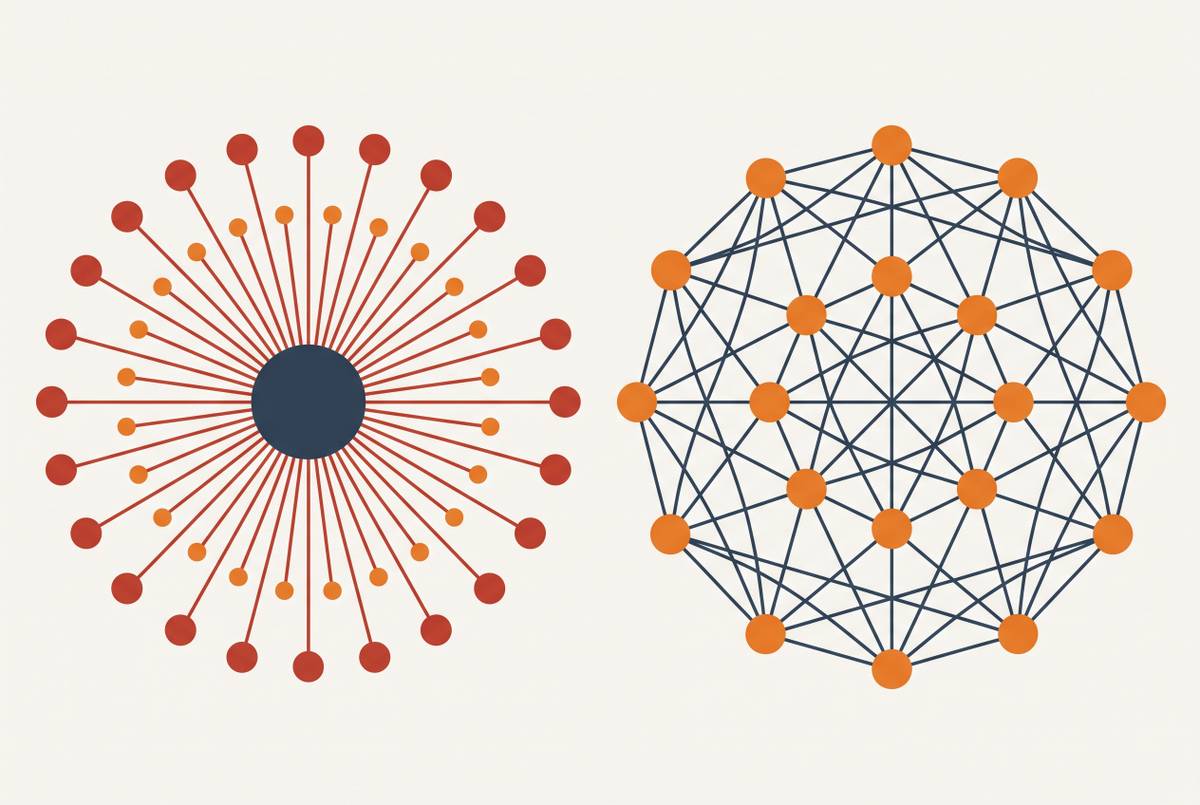
The organizational design should combine centralized policy and risk appetite with federated execution and ownership. Business functions remain responsible for their AI use cases, while a named, empowered structure retains authority to pause deployments, investigate anomalies, and document adverse decisions. Execution can be distributed without dispersing the right to intervene. When several committees that meet quarterly must act, a purely federated structure is weaker because who can make a binding decision may be unclear just when one is needed.
IBM illustrates how layers can connect without becoming interchangeable. Its Policy Advisory Committee of senior global leaders oversees a central AI Ethics Board with governance and decision-making authority. Business-unit AI Ethics Focal Points escalate issues to that board, while an Advocacy Network supports grassroots scaling.
Finally, continuous discovery, monitoring, policy enforcement, and audit logging should sit within the institution’s enterprise risk management structure. SR 26-2, the EU AI Act, and NIST AI RMF stack rather than replace one another, making integration important across jurisdictions. Quarterly review can still be a time to weigh decisions. It cannot be the only occasion on which control operates. Continuous oversight is not an accessory to committee governance, but what makes that governance real.